Three Types of Credit Cards — And Why the Black Card Never Shows a Limit
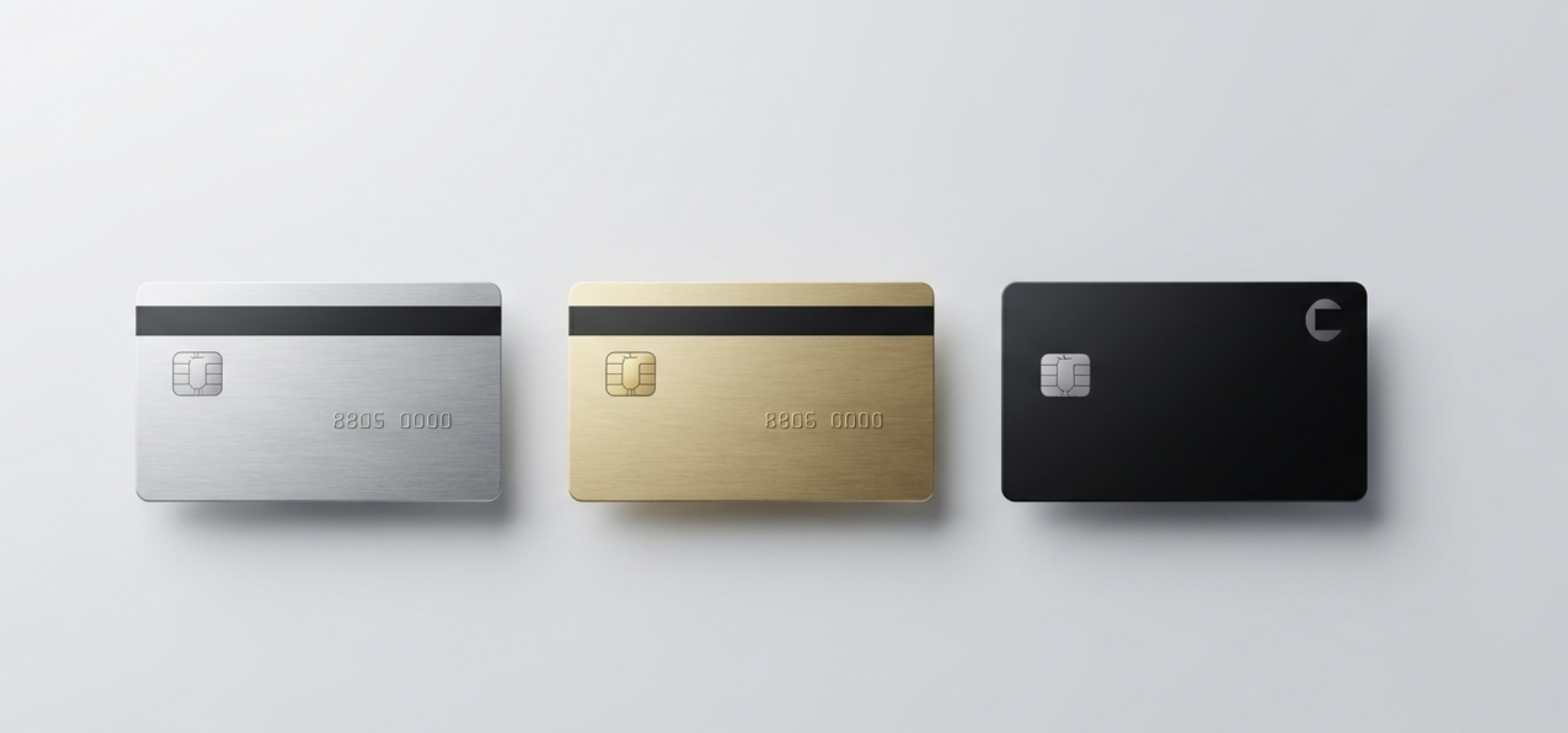
There's a scene you've seen in films: someone pays without glancing at the total, sliding a matte black American Express across the counter.
You assume it means an enormous credit limit. It doesn't. That card has no fixed limit at all.
Three cards. Three different rules.
Charge cards — like the Amex Centurion or Platinum — have no preset spending limit. Each transaction is approved in real time based on your profile. The catch: the full balance is due every month, no exceptions, no minimum payment option. Think of it as "the bank floats the cost, you settle in full." Debt, by design, isn't part of the equation.
Revolving credit cards are what most people carry. They come with a set credit limit — say HK$50,000 — and you can choose to pay only the minimum each month, carrying the rest as a rolling balance that accrues interest. This is where banks actually make their money.
Secured credit cards are the type few people have heard of. To open one, you deposit funds upfront — say AED 20,000 in Dubai — and your credit limit mirrors that deposit. It's not a penalty. It's the bank using your own money as a substitute for a local credit history you haven't had the chance to build yet. For new arrivals in a country, it's often the most practical first step.
A fourth type sits in between: hybrid cards that start deposit-backed and gradually unlock a credit line as your track record grows — common for new customers or those just beginning to establish credit.
One line to remember:
Some cards won't let you carry debt. Some cards profit when you do. Some cards ask you to prove you can pay before they trust you.
The black card in the movies isn't impressive because of how much you can spend. It's impressive because the person holding it doesn't need to borrow to spend at all.