US Credit Cards for New Immigrants: A Complete Beginner's Guide (2026)
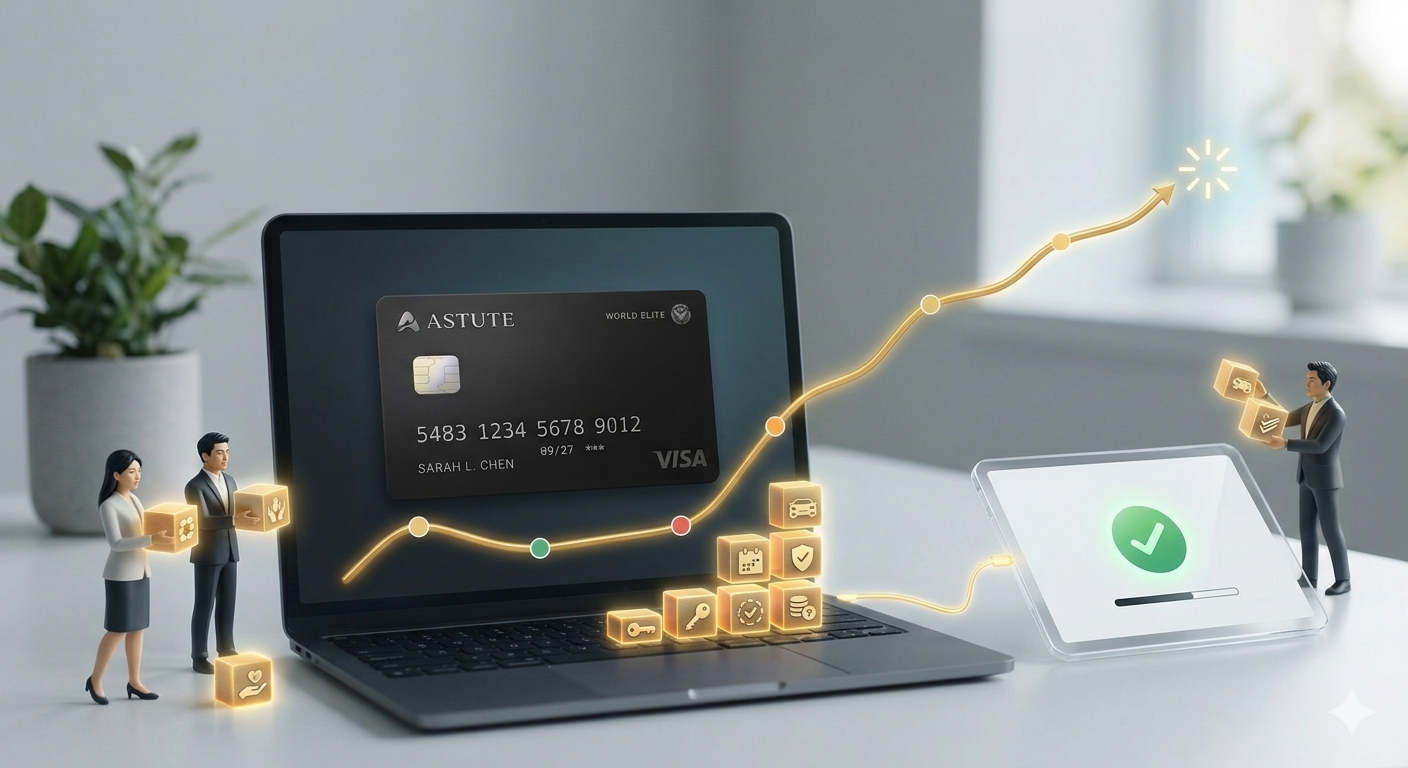
Moving to a new country means rebuilding financial credibility from scratch. In the United States, your credit score follows you everywhere — it affects your ability to rent an apartment, finance a car, and eventually get a mortgage. This guide explains how the US credit system works and gives you a practical roadmap to establish credit as a new arrival.
Just moved to the US? This guide explains how the American credit system works, which cards to start with, and how to build credit from zero — written for immigrants and new arrivals.
Moving to a new country means rebuilding financial credibility from scratch. In the United States, your credit score follows you everywhere — it affects your ability to rent an apartment, finance a car, and eventually get a mortgage.
This guide explains how the US credit system works and gives you a practical roadmap to establish credit as a new arrival.
How the US Credit System Works
In the US, your creditworthiness is measured by a credit score — a number between 300 and 850. The most widely used scoring model is FICO.
What affects your credit score:
Factor | Weight |
|---|---|
Payment history (on-time payments) | 35% |
Credit utilization (how much of your limit you use) | 30% |
Length of credit history | 15% |
Credit mix (cards, loans, etc.) | 10% |
New credit inquiries | 10% |
The most important thing to understand: you start with no score at all, not a bad score. This is called being "credit invisible." You need to open accounts and use them responsibly to generate a score.
Step 1: Get Your Identification Documents in Order
Before applying for any credit product, make sure you have:
Passport (always required)
Visa (F-1, H-1B, O-1, green card, etc.)
SSN or ITIN — SSN takes priority, but an ITIN works for many cards
US bank account — Most card issuers want to see this
If you don't have an SSN yet, read our guide: How to Apply for a US Credit Card Without an SSN.
Step 2: Open a US Bank Account First
A checking account at a US bank establishes your banking relationship and makes credit applications easier. Major options:
Chase — Widest branch network, easy to open
Bank of America — Good for newcomers
Citibank — Strong if you already bank with Citi internationally
Online banks (SoFi, Ally) — No minimum balance, higher interest on savings
Having 2–3 months of banking history before applying for a credit card improves your approval odds.
Step 3: Your First Credit Card
If you have an SSN and some income:
Start with a secured card or a card designed for people with limited credit history.
Best starter cards for immigrants:
Discover it® Secured
No annual fee
2% cashback at gas stations and restaurants, 1% everywhere else
Accepts ITIN
Automatic review for upgrade after 7 months
Matches all cashback earned in your first year
Capital One Platinum Secured
No annual fee
Deposit as low as $49
Automatic credit line review after 6 months
Capital One Quicksilver Student
If you're a student: 1.5% cashback on everything, no annual fee
If you're an international student (F-1/J-1):
Deserve EDU Mastercard — No SSN required, no US credit history required. Apply with your passport and I-20.
Step 4: Use the Card Correctly
Getting the card is easy. Using it right is what builds your credit.
The rules:
Pay in full every month. This is the single most important habit. Carrying a balance costs you interest and doesn't help your credit score.
Keep utilization low. If your credit limit is $500, try to never have more than $150 charged on the card at statement time (30% utilization). Under 10% is even better.
Never miss a payment. Set up autopay for at least the minimum payment. A single missed payment can drop your score by 50–100 points.
Don't apply for too many cards at once. Each application creates a hard inquiry. Space applications at least 6 months apart.
Step 5: Graduating to Better Cards
After 12–18 months of responsible use, your credit score should be in the 670–720 range. At this point, you can apply for cards with real rewards.
Recommended progression:
Stage | Timeline | Card to Consider |
|---|---|---|
Starter | Month 0–6 | Secured card or Deserve EDU |
Building | Month 6–18 | Discover it® Cash Back or Capital One Quicksilver |
Established | Month 18+ | Chase Freedom Flex, Citi Double Cash |
Premium | Year 2–3 | Chase Sapphire Preferred, Amex Gold |
Common Mistakes New Immigrants Make
Mistake 1: Applying for too many cards at once Each application is a hard inquiry on your credit report. Multiple inquiries in a short period signal financial stress to lenders.
Mistake 2: Carrying a balance to "build credit" This is a myth. You don't need to pay interest to build credit. Pay in full.
Mistake 3: Closing old accounts Length of credit history matters. Keep your first card open even after you've graduated to better cards. Use it for a small recurring purchase once a month.
Mistake 4: Ignoring credit monitoring Sign up for a free credit monitoring service (Credit Karma, Experian's free tier). Check your report for errors quarterly.
Understanding US Credit Card Fees
Unlike Hong Kong or many other markets, most competitive US credit cards charge no foreign transaction fees and have no annual fee at the entry level.
Key fees to understand:
Annual fee: $0 for starter cards, $95–$695 for premium cards
APR (interest rate): 20–28% is typical. Avoid paying this by paying in full.
Foreign transaction fee: Usually 3% if applicable — choose cards that waive this
Late fee: Up to $40. Avoid entirely with autopay.
Frequently Asked Questions
Q: Can I use my credit score from Hong Kong / China / Canada? Generally no. US credit bureaus don't have access to foreign credit data. You start fresh. (Exception: Nova Credit works with some countries to port your credit history.)
Q: How long does it take to build a good credit score? Most people reach 670+ (considered "good") within 12–18 months of responsible use. 750+ typically takes 2–3 years.
Q: Should I get a credit card if I can pay cash for everything? Yes, if you plan to stay in the US long-term. A strong credit score saves you money on apartment deposits, car loans, and mortgage rates. The sooner you start, the better.
Q: What if I get rejected? Don't apply again immediately. Find out why (the issuer must send you an adverse action notice), address the issue, and wait at least 3–6 months before trying again.
ClearFinLab is an independent comparison platform. We do not accept paid rankings. Product details accurate as of 2026 — verify current terms with card issuers before applying.